

Champaign/Urbana
Bloomington/Normal
Lic: 104-017259
design your own roof
Financing Available!
Request a Free Quote
Champaign/Urbana
Bloomington/Normal
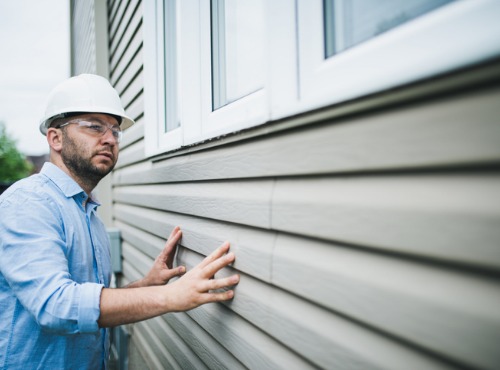
When planning a siding upgrade, homeowners often ask a practical and important question: Do you remove old siding before installing new?
The answer depends on the condition of the existing materials, the structure beneath them, and the long-term performance goals of the project.
While it may seem efficient to install new siding over old layers, this approach is not always advisable. Many siding contractors recommend a full inspection before installation to determine whether removal is necessary for long‑term performance. In many cases, full removal is the correct and professional method.
Homeowners throughout Champaign-Urbana, Bloomington-Normal, and surrounding Central Illinois communities often evaluate siding replacement options when their exterior begins showing signs of aging, damage, or moisture intrusion.
Siding is not just decorative. It functions as a protective barrier against moisture, temperature changes, and environmental exposure. What lies beneath the visible surface is often more important than the siding itself.
Skipping proper removal can conceal structural issues, trap moisture, and reduce the lifespan of the new installation. A professional siding evaluation helps identify these concerns before a replacement project begins.
In most siding replacement projects, removing the old material is considered best practice. This allows contractors to fully evaluate the underlying structure and ensure the new system performs correctly.
Full removal is typically recommended when:
Central Illinois homes are particularly vulnerable to hidden moisture issues due to seasonal humidity and freeze–thaw cycles, which is why contractors often recommend a thorough inspection before siding replacement begins.
What appears to be a cosmetic issue may actually involve deeper concerns. Layering new siding over old materials can hide several problems.
Water infiltration may compromise sheathing, framing, or insulation.
Rot and decay are often invisible until materials are removed.
Older siding systems may lack modern flashing techniques or weather-resistant barriers.
Wall assemblies benefit from proper airflow and drainage design.
Identifying these conditions early prevents larger problems later.
There are limited scenarios where overlay installation may be considered, but strict conditions must be met.
Overlay installation may be viable when:
Even in these situations, contractors must carefully evaluate risks before proceeding and determine whether overlay installation meets manufacturer guidelines and local building codes.
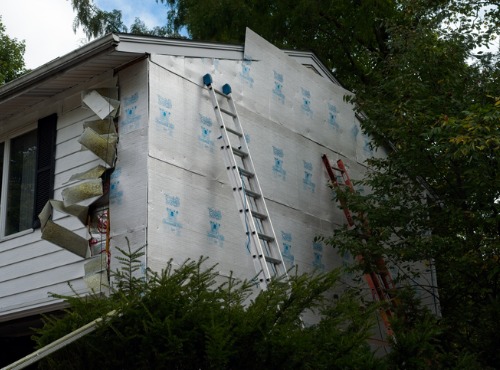
Installing new siding without removing existing layers can create several long-term complications.
These risks often outweigh the short-term time savings, particularly when a full siding replacement project is intended to last decades.
Although removal requires additional labor initially, it provides significant long-term advantages.
Regional weather patterns increase the importance of correct siding installation practices.
Homes in Central Illinois experience conditions such as:
Wind-driven rain and freeze–thaw cycles can amplify the consequences of hidden moisture damage behind siding systems. When siding is removed during replacement, contractors can confirm that flashing, drainage systems, and moisture barriers are functioning correctly before the new siding is installed.
Siding replacement involves more than simply attaching exterior panels. Professional installers evaluate the full exterior wall system, including sheathing condition, flashing around windows and doors, insulation layers, fastening patterns, and ventilation gaps that allow the siding system to perform correctly. Contractors must consider moisture management, flashing integration, fastening systems, and overall building envelope performance.
Working with an experienced siding contractor helps ensure:
For homeowners considering siding replacement, a professional inspection helps determine whether siding removal, repairs, or a full exterior upgrade is the most appropriate solution.
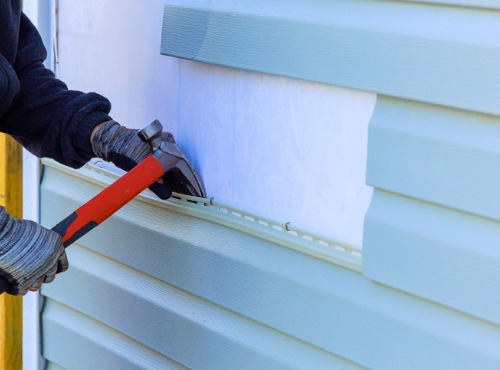
If you are considering siding replacement or evaluating the condition of your existing siding, a professional inspection can help determine the correct approach.
Popejoy Roofing works with homeowners throughout Champaign-Urbana, Bloomington-Normal, and surrounding Central Illinois communities to evaluate siding conditions and recommend appropriate solutions.
Bloomington-Normal: 309-530-4204
Champaign-Urbana: 217-600-2464
While overlay installation may reduce labor costs initially, it can create long-term performance issues if underlying damage is present.
Removal allows contractors to inspect sheathing, repair moisture damage, and install modern moisture barriers before installing new siding.
In some cases it may be possible, but professionals typically recommend removal to ensure proper installation and wall inspection.
Yes. Removal allows contractors to evaluate insulation and upgrade wall assemblies before installing new siding.